You know how fast a small leak turns into a massive problem. Figuring out exactly how to shut off water main lines is the absolute best way to prevent a minor issue from becoming a total disaster.
The team at El Centro Plumbing Pros exists to solve one problem: getting an Imperial Valley homeowner connected to a plumber quickly.
A completely severed half-inch water line can pump over 40 gallons of water per minute straight into your living room. We regularly see how a few wasted minutes can push repair costs well past the 2026 national average of $15,400 for water damage claims.
Let’s break down exactly where to locate your valves, what type of hardware you are dealing with, and how to stop the flow immediately.
Find it before you need it: How to shut off water main
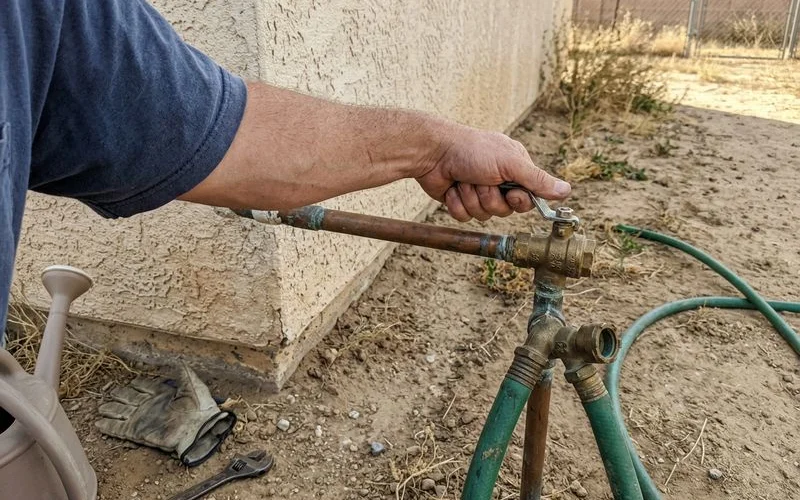
The main water shutoff valve is typically located on the street-facing exterior wall of your home, inside the garage, or near the street in a concrete utility box. Finding this valve immediately is your first line of defense during a plumbing emergency.
The plumber recommend taking five minutes on a calm afternoon to locate your specific valve. This simple step ensures you can stop a flood before it damages your property.
There are usually two distinct options for shutting down the supply in an El Centro home.
- The house main: This primary valve sits right where the supply line enters the building structure.
- Common spots: Look near an outdoor hose bib, inside the garage, or tucked into a utility closet.
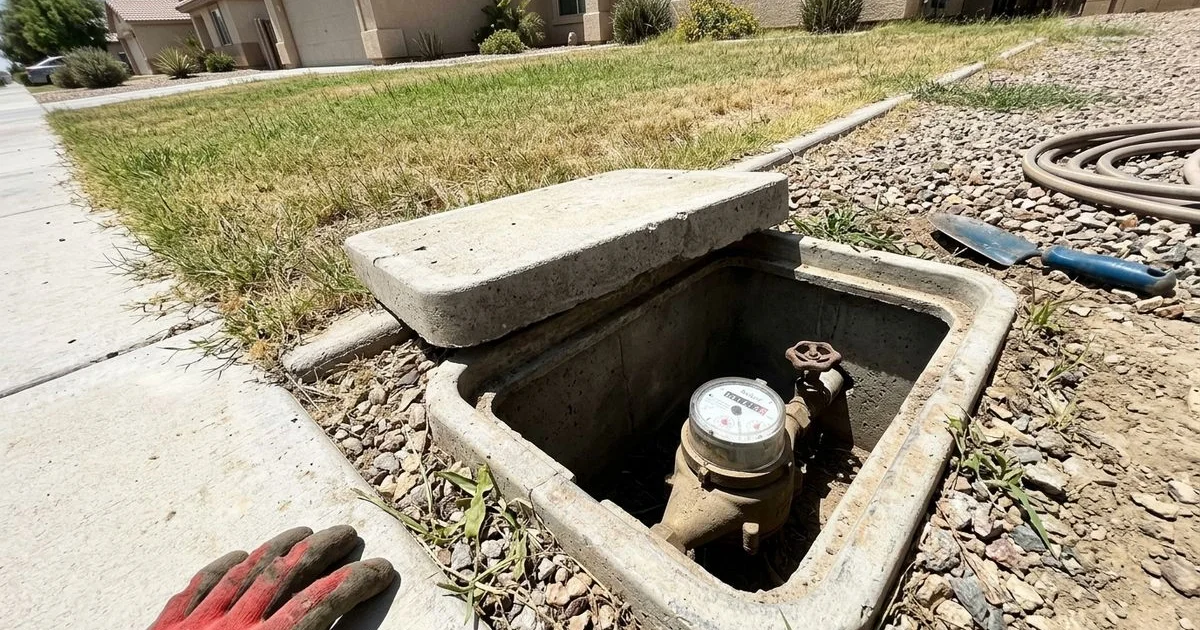
- The meter valve: This backup option sits inside a concrete box at the curb, directly on the house side of the municipal meter.
We always advise homeowners to try the house main first because it is significantly easier to reach. The meter valve acts as your reliable backup when the primary house main is missing or completely frozen shut.
If water is actively flooding your home right now and you cannot find either valve, call emergency plumbing at 760-509-2525. The dispatch line is answered, and we will find the valve with you over the phone in English or Spanish.
Ball valve or gate valve
The hardware controlling your water supply will either be a modern ball valve with a straight lever or an older gate valve featuring a round, wheel-like handle. Identifying which type you have determines exactly how you should operate it during a crisis.
We install modern quarter-turn ball valves, like those from Apollo or SharkBite, because they are incredibly fast and reliable. You simply turn the straight lever a quarter turn so it sits crosswise to the pipe, which completely stops the flow.
Older Imperial Valley homes often still rely on traditional gate valves. These require several full clockwise rotations of the round wheel handle until the internal mechanism fully stops the water.
The plumber frequently see these older wheel mechanisms seize up completely. This happens because the internal stem corrodes in place when the fixture sits untouched for twenty years.
If a round wheel handle resists your turning effort, you must stop immediately. Forcing a corroded stem can shear the internal metal or crack the brass body completely. You will instantly transform a stoppable leak into an unstoppable flood, so you should abandon the seized fixture and go straight to the street meter instead.
Exercise your valves
Once a year, close and reopen the main house supply. It takes just one minute, and it provides the absolute best insurance against discovering a seized mechanism during an actual emergency. Imperial County pulls municipal water directly from the Colorado River, and the city’s water quality report puts local hardness at roughly 20 grains per gallon (340 to 350 mg/L). We know that in this heavy mineral environment, metal components that never move will eventually lock solid.
Using the meter valve
To turn off water to house plumbing systems at the street, you must open the concrete utility box at the curb and turn the valve located on the house side of the city meter. This municipal connection serves as your ultimate failsafe if the primary residential shutoff fails.
Our emergency crews recommend using a long flathead screwdriver to carefully pry up the heavy concrete or metal lid. You should always watch closely for black widow spiders, as these dark, damp subterranean boxes are their favorite nesting spots.
Inside the housing, you will spot the actual digital or analog usage meter. The mechanism you need to turn is positioned on the pipe running directly toward your property.
Tools for the Job
Depending on the age of your neighborhood, you will encounter one of two styles.
- Lever-style: Some properties feature a modern lever that easily closes with a simple quarter turn by hand.
- Tab-style: Many older installations feature a brass tab that requires a specialized water meter key.
We strongly suggest purchasing a 28-inch solid steel T-handle meter key, like those made by Jones Stephens, from your local Home Depot. These heavy-duty steel tools cost roughly $15 to $30 and are absolutely essential to keep hanging in your garage for emergencies.
Place the slotted end of the tool over the brass tab and twist it until the metal aligns crosswise to the underground pipe. You must never touch the separate mechanism located on the street side of the dial. That specific hardware belongs exclusively to the local utility company, and tampering with it can result in steep municipal fines.
Individual fixture stops
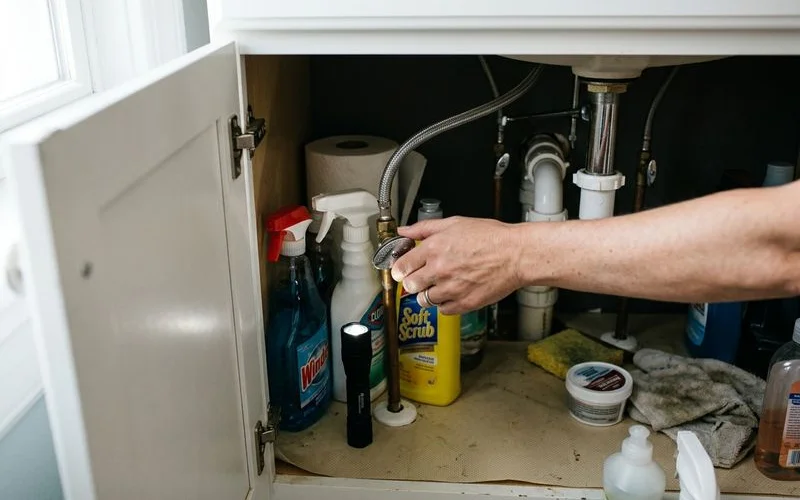
Isolating a leak at a single appliance requires turning the localized angle stop valve located directly behind or beneath that specific fixture. You do not need to shut down the entire property’s plumbing system for a simple dripping faucet or running toilet.
The plumber always check these local isolation points first before heading outside to the street.
Common Fixture Valve Locations
| Fixture Type | Valve Location |
|---|---|
| Bathroom & Kitchen Sinks | Dual hot and cold angle stops mounted on the wall inside the cabinet. |
| Toilets | A single cold supply valve on the wall near the base of the tank. |
| Water Heaters | A dedicated cold inlet lever located on the piping directly above the unit. |
| Washing Machines | Hot and cold levers recessed into a plastic wall box behind the appliance. |
You close traditional multi-turn fixtures by rotating the handle clockwise. You must be extremely gentle with these older plastic or brass knobs. The roughly 20 grains per gallon of hard-water deposits common in El Centro rapidly build up around the internal stem.
We swap out these corroded components for reliable BrassCraft quarter-turn stops whenever we work under a sink. If an old knob refuses to budge or begins weeping water at the packing nut behind the handle, stop twisting immediately. Close the primary house main instead, and have a professional replace the failing component.
After the water is off
Once you secure the main valve, you must immediately relieve the remaining trapped pressure by opening the lowest faucet on your property. Draining the residual fluid prevents additional interior flooding while you wait for professional repairs.
Our first instruction over the phone is usually to open an outside hose bib or a low-lying laundry sink. This gives the 60 PSI of trapped water a safe place to exit. You should then open a faucet or two on the upper level of your home. This introduces air into the plumbing system and allows the pipes to drain quickly and completely.
Protect Your Water Heater
If your emergency involves the hot water system, immediately close the cold inlet valve on top of the tank. You must then shut off the gas supply line or flip the electrical breaker powering the unit.
We see costly secondary damage happen when a homeowner forgets this vital step. Allowing a gas or electric heater to continue firing on a draining tank will quickly burn out the heating elements or permanently damage the internal tank structure.
Contacting Emergency Services
With the situation stabilized, it is time to make the call. For the complete sequence of actions during an active flooding event, including power safety and damage containment, read our full guide on what to do when a pipe bursts.
Always tell the dispatcher immediately that you have successfully secured the supply. This crucial detail changes exactly how the dispatch team prioritizes your emergency and dictates the specific equipment the arriving plumber brings to your door.
Conclusion
Taking the time to locate and test your main water shutoff valve today is the most profitable five minutes you can invest in your property. You now possess the exact knowledge required to stop a catastrophic leak before it destroys your drywall and flooring.
Our El Centro plumbing team is always ready to step in once the immediate threat is contained.
Find your valves, buy a meter key, and call us at 760-509-2525 whenever the unexpected strikes.