Hard-water specialists

Water Heater Repair & Replacement Built for Hard Water

Gas, electric, and tankless water heater repair and replacement, thermostat, element, anode rod, tank flushing, and full replacement, built around the hard-water scale that kills valley heaters early.

Answered 24/7 English & Spanish Free estimate request All of Imperial County
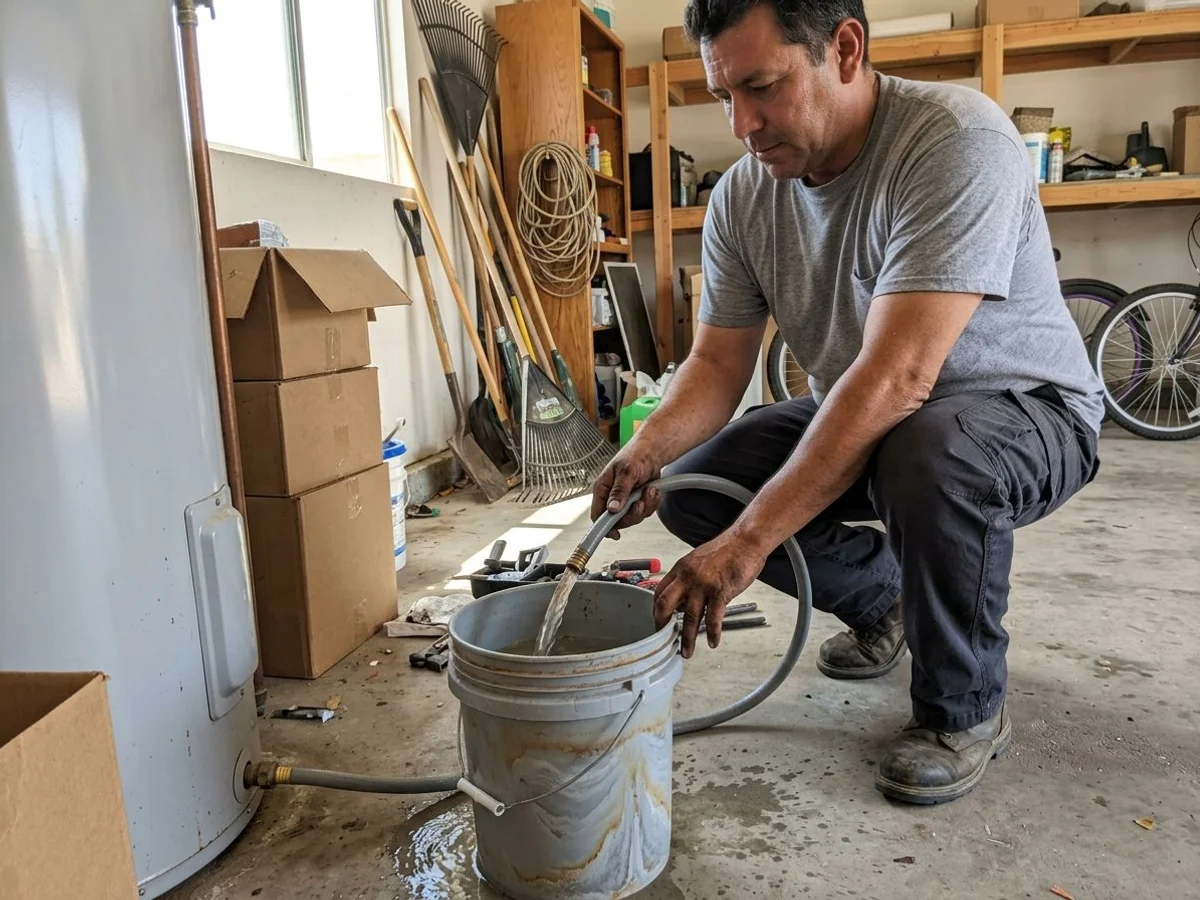
Plumber draining a water heater tank into a bucket in an El Centro garage
Serving all Imperial County
Answered 24/7
Nights, weekends, holidays
Free estimate request
No obligation to proceed
Se habla espanol
Nights, weekends, holidays

Have you ever turned on the shower only to be hit with freezing cold water?

That sudden shock is a terrible way to start the morning.

We know that dealing with a broken plumbing system is stressful, especially when you have an active emergency like a burst pipe or zero hot water.

Getting your system running again fast is exactly why we specialize in Water Heater Repair & Replacement.

Our bilingual team at El Centro Plumbing Pros is ready to help you at any hour.

You will learn exactly what to look for and how to fix it in the steps below.

Gas, electric, and tankless

We handle repair, thermostat and element replacement, anode rod service, tank flushing, and full replacement across all three types.

Whatever is in your garage or utility closet, the work starts with figuring out what actually failed rather than quoting a new unit on sight.

Our service area in the Imperial Valley has some of the hardest tap water in California.

Recent water quality reports show our local water hardness measures an extreme 20 grains per gallon (GPG).

We see calcium and magnesium precipitate out of this heavy water every time it is heated.

That sediment layer builds up over the burner over time.

Industry experience shows this mineral blanket insulates the burner from the water it is supposed to heat.

This forces longer and longer burn cycles.

We watch the gas bill climb while recovery slows down.

The steel tank corrodes from the inside while it is being overworked.

A 2026 study from the Water Quality Research Foundation found that hard water reduces water heater efficiency by up to 48% due to scale buildup alone.

Our daily service calls confirm that a unit rumbling, popping, or running out of hot water is telling you exactly that story.

None of those symptoms mean the heater is finished today.

We always warn customers that the clock has definitely started ticking.

Symptoms and what they usually mean

  • Popping or rumbling during a heat cycle. Water gets trapped under a thick layer of calcium carbonate and boils its way out. We find this confirms a heavy scale layer on the tank bottom.
  • Running out of hot water sooner. Sediment takes up volume that used to hold water. The plumber often discover the burner is struggling through a thick insulating layer, or sometimes a failing dip tube is to blame.
  • Rust in the hot water only. This points to internal tank corrosion, usually occurring after the sacrificial anode rod is fully consumed. We consider this a late-stage failure warning.
  • No hot water at all. Gas units might have a broken pilot, bad thermocouple, or gas control problem. Our electric repairs usually involve a tripped high-limit switch, a dead heating element, or a bad thermostat. Both scenarios are usually simple repairs, rather than full replacements.
  • Moisture or a small puddle at the base. A leaky fitting, a discharging T&P valve, or a cracked tank could be the culprit. We always test to find out exactly which part failed before you replace anything.
  • Tankless error codes. A Rinnai displaying an LC code or a Navien showing an E003 code means your heat exchanger is choked with scale. We see this constantly on units that have skipped their annual maintenance.

Tankless in 20-grain water

Tankless units are excellent pieces of equipment, and they are incredibly unforgiving about maintenance in this valley.

We know the heat exchanger runs water through narrow passages at very high temperatures.

This is precisely the condition that deposits scale the fastest.

Most manufacturers publish descaling intervals based on average national water conditions.

Our local water in Imperial Valley is far from average.

In practice, most tankless units here need a thorough descaling flush at least annually.

We find that heavy-use households sometimes need this service every six months.

Skipping this maintenance means you lose efficiency first and start seeing those error codes second.

Industry experience shows that ignoring the problem will shorten the life of a unit that should have lasted twenty years.

Water Heater TypeExpected Lifespan (Soft Water)Expected Lifespan (Hard Water)Common Hard Water Failure
Standard Tank10 to 15 Years5 to 7 YearsBottom tank corrosion
Tankless Unit15 to 20+ Years8 to 10 YearsClogged heat exchanger

The specialized distilled white vinegar flush safely dissolves calcium buildup without damaging the internal copper components.

We descale heat exchangers on a strict schedule to prevent this damage.

In most cases, softening the water stretches the maintenance interval enough to pay for part of itself.

The plumber will tell you honestly whether installing a water softener upstream is worth the investment for your household.

Replacement done properly

When a replacement is the right call for your home, sizing matters much more than the brand logo on the box.

We match the new capacity to how your household actually uses hot water on a daily basis.

This means calculating how many showers run back to back, checking if the dishwasher and laundry overlap, and factoring in the recovery penalty that hard water imposes here.

The installation process must follow strict local safety guidelines to pass inspection.

The team includes all mandatory safety features to protect your property:

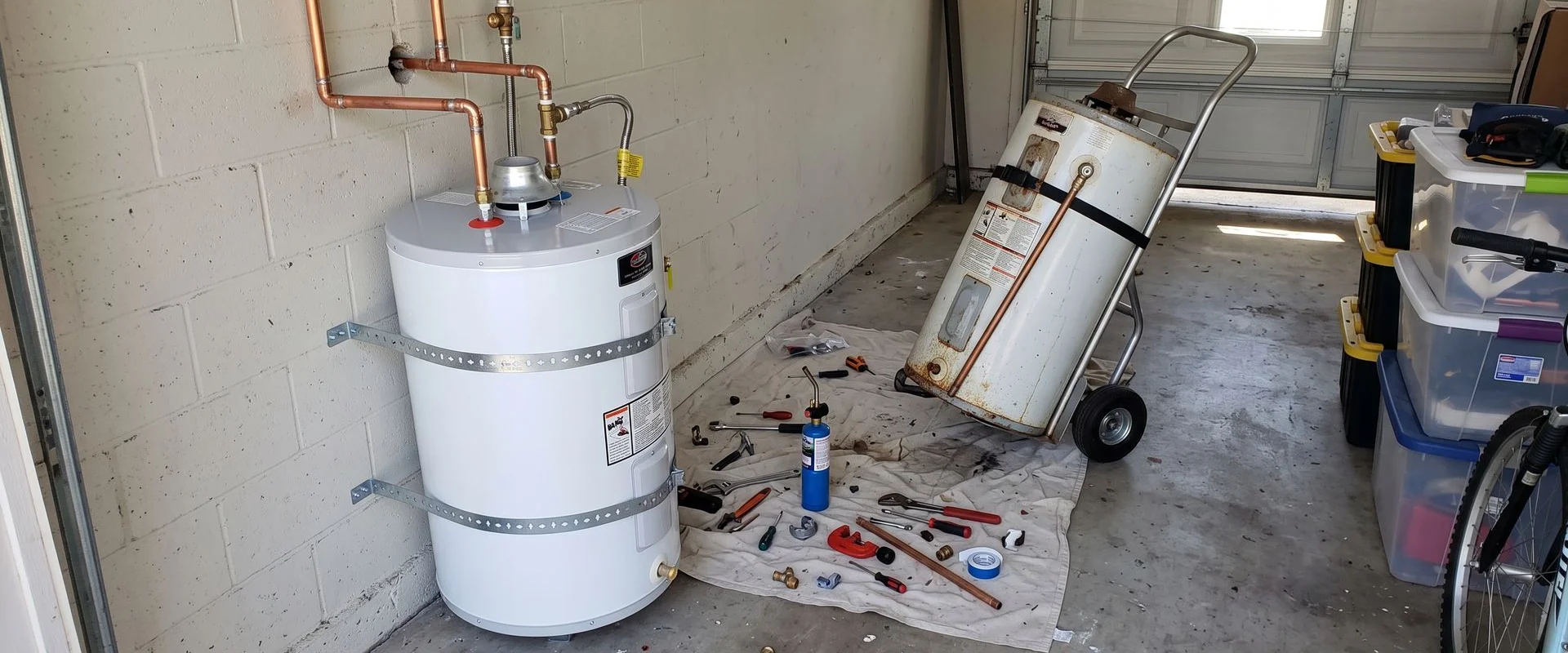
  • Thermal Expansion Tanks: Required by California Plumbing Code (CPC) Section 608.3 on all closed systems to absorb excess pressure and prevent burst pipes.
  • Seismic Strapping: California law dictates heavy-duty straps in the upper and lower third of the tank for earthquake safety.
  • Code-Compliant Connections: Proper venting, new flex connectors, and correctly routed T&P discharge lines are included on every job.

Old units are hauled away during the job so you do not have to deal with the mess.

Once the new unit is secure, the real protective work begins.

We set up a flushing and anode rod replacement schedule that keeps your new system from following the same path as the old one.

If you want the background on why that matters, the water heater guides cover the failure mechanism in detail.

Ready for Reliable Hot Water?

Having a steady supply of hot water should never be a luxury you have to worry about.

We are here to help you make the smartest choice for your home and budget.

Give El Centro Plumbing Pros a call today to schedule your inspection, and let us get your hot water flowing perfectly again.
The difference

Why choose us for water heaters

We plan around 20 grains

El Centro water runs about 340 to 350 mg/L. Every sizing, flushing, and descaling recommendation we make starts from that number.

Scale diagnosis, not guesswork

Popping and rumbling are sediment. Rust on the hot side is internal corrosion. We tell you which failure you actually have.

Tankless done properly

Tankless units here need descaling far more often than the manual suggests. We service them on a real interval and set it up with you.

Right-sized replacements

Capacity matched to the household, with the expansion tank, straps, and venting done to local plumbing standards.

Emergency tank failures

A leaking tank is a 24/7 call. Fifty gallons on a garage floor does not wait for business hours.

The treatment conversation

If untreated water is what killed the last heater, we will say so, and show you what a softener upstream changes.

Step by step

How our water heaters work goes

  1. 01

    Symptom check

    Popping, rust on the hot side, running out sooner than it used to, moisture at the base. Each one points somewhere different.

  2. 02

    Inspect the tank

    Age, scale load, anode condition, T&P valve, connections, and venting. We look at the whole install, not just the complaint.

  3. 03

    Repair or replace, honestly

    A young unit with a bad element gets a part. A scaled, corroding tank past its rated life gets replaced. We show you which one you have.

  4. 04

    Set up maintenance

    Flushing interval, anode checks, and for tankless units a descaling schedule that matches 20-grain water rather than the manual.

Get a free estimate before anything is scheduled

Call and describe the problem. We triage it over the phone, quote it honestly, and there are never surprises when the truck shows up.

Side by side

How we compare

Feature Typical provider El Centro Plumbing Pros
Failure diagnosis Replace and move on Identify the scale or corrosion cause first
Hard-water context National average assumptions Sized and scheduled for ~20 gr/gal
Tankless descaling Rarely mentioned Scheduled service on a valley interval
Anode service Not offered Checked and replaced to extend tank life
Leaking tank after hours Next business day 24/7 emergency dispatch
On the job

Our water heaters work

Click any photo to enlarge.

Verified feedback

What customers say about our water heaters

4.9 from 150+ Google reviews
"Our water heater kept running out of hot water. They flushed a ton of scale out of the bottom and explained it was the hard water. Made total sense once they showed me. Runs like new now."
Denise M.
"Tankless was throwing an error code every few weeks. Turns out it had never been descaled in four years. Descaled it, set up a schedule, no codes since."
Hector A.
"Tank let go on a Saturday night. They were out that night, shut it down, and had a new one in the next morning. No drama."
Priscilla N.
Common questions

Water Heaters FAQs

Why do water heaters fail so early in El Centro?

Hard water. At roughly 20 grains per gallon, calcium and magnesium precipitate out inside the tank and settle on the bottom. That scale layer insulates the burner from the water, which forces longer burn cycles, drives up gas use, and corrodes the tank from the inside. It is the single biggest reason heaters here fail years short of their rated life.

My water heater is popping and rumbling. What does that mean?

Water trapped underneath a layer of sediment boils and forces its way out, which makes the popping sound. It is a direct sign of scale buildup on the tank bottom. Caught early, a flush usually quiets it. Left long enough, the heat stress that causes it accelerates tank failure.

Should I repair or replace?

A younger unit with a failed thermostat, element, or T&P valve is worth repairing. A tank past its rated life, with heavy scale, rust in the hot water, or any moisture at the base, is worth replacing. We show you the condition rather than just quoting a number.

How often should a water heater be flushed here?

More often than the manual says. In 20-grain water, an annual flush is a reasonable baseline and some households benefit from twice a year. If the tank has gone years without one, the first flush tells us a lot about what shape it is in.

What does the anode rod do?

It is a sacrificial metal rod that corrodes in place of the steel tank. Once it is consumed, the tank itself starts corroding. Checking it every few years and replacing it when it is spent is the cheapest way to extend the life of a heater in hard water.

How often does a tankless unit need descaling in Imperial Valley?

Commonly once a year, and sometimes more, depending on use. Tankless heat exchangers have narrow passages that scale quickly at this hardness. Skipping it costs efficiency first, then triggers error codes, then shortens the unit's life. A softener upstream stretches the interval considerably.

Is tankless worth it with water this hard?

It can be, but only if you plan for the maintenance. Tankless costs more upfront and saves on standby energy, and in this valley it needs regular descaling and ideally softened water feeding it. If nobody is going to keep up with that, a well-maintained tank is the more honest recommendation.

Is rusty hot water a serious sign?

Usually yes. If the rust shows up only on the hot side, it points to internal tank corrosion rather than a supply issue. That is often the last warning before a tank starts leaking.

What size water heater do I need?

It depends on household size and peak demand, not just square footage. We size the replacement against how many showers run back to back and what appliances draw hot water, and we account for the recovery loss that scale causes here.

Do you handle emergency water heater failures?

Yes, 24/7. If a tank is leaking, shut off the cold supply valve above the heater and the gas or breaker, then call 760-509-2525.

Still have a question?

Call and describe it. We triage over the phone before anyone is dispatched.

Call 760-509-2525
Read first

Guides on water heaters

Does an Anode Rod Really Extend Water Heater Life in Hard Water?

What the sacrificial anode does, magnesium versus aluminum, replacement intervals at 20 grains per gallon, and the cost against early tank replacement.

Read the guide

Signs Your Water Heater Is Failing

Running out of hot water sooner, rust on the hot side, popping, and moisture at the base, the warning signs and when repair still beats replacement.

Read the guide

Tank vs Tankless Water Heater for Imperial Valley Homes

Upfront versus lifetime cost, the tankless descaling burden in hard water, sizing for your household, and a straight recommendation framework.

Read the guide

Tankless Water Heater Descaling Frequency in Hard Water Areas

At around 20 grains per gallon, tankless units scale fast. How often to descale, what happens without it, and how a softener upstream cuts the maintenance.

Read the guide

Water Heater Repair vs Replacement in El Centro

Age and condition thresholds, the cost-of-repair math, how scale damage changes the decision, and when replacement is clearly the better spend.

Read the guide

Why Is My Water Heater Making Popping or Rumbling Sounds?

Popping and rumbling means sediment and scale on the tank bottom. What the noise actually is, the risk of ignoring it, and when a flush still helps.

Read the guide

Why Water Heaters Fail Early in Imperial Valley

Hard-water scale insulates the burner, forces longer cycles, and corrodes the tank from the inside, why valley heaters die years short of their rated life.

Read the guide
Plumber loading tools into a service van at dusk in El Centro
Answered 24/7, English & Spanish

Need water heaters in Imperial County?

Call and describe what is happening. Your call is answered in English or Spanish at any hour, and the estimate is free.

Free estimate request All of Imperial County Se habla español
760-509-2525