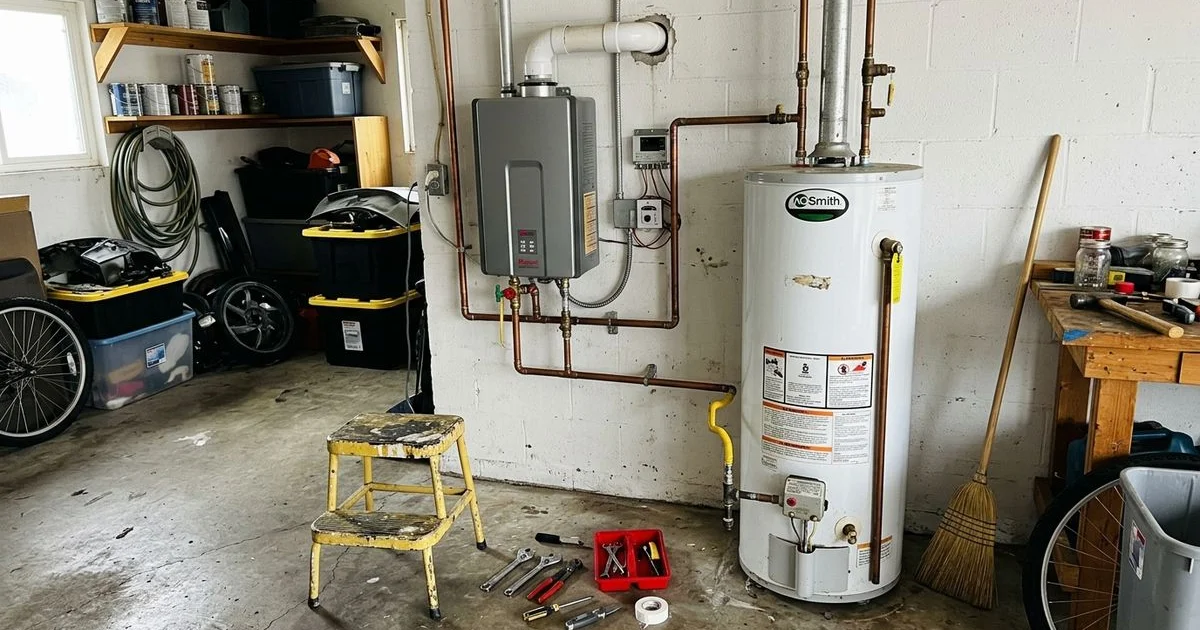
The real tradeoff in this valley
The team at El Centro Plumbing Pros sees homeowners panicking over a sudden burst pipe or a lack of hot water every single day. The real tradeoff between a tank vs tankless water heater comes down to local water quality. You are forced to make a quick decision about replacement equipment while your house is cold.
We know that in the Imperial Valley, a third factor outweighs upfront cost and endless hot water. That factor is our incredibly hard water, which measures roughly 20 grains per gallon. This extreme mineral content dictates exactly how each type of equipment will eventually break down.
The plumber watch both systems scale up, but they fail very differently.
A traditional tank accumulates sediment on the bottom, loses efficiency slowly, and eventually corrodes through the steel walls. Tankless units fail by accumulating scale inside a narrow heat exchanger, throwing error codes, and needing expensive components. We believe that which failure mode you would rather manage is genuinely part of this buying decision.
This specific geographical challenge shapes how to approach every replacement job. Every single water heater repair and replacement here depends on understanding these local conditions.
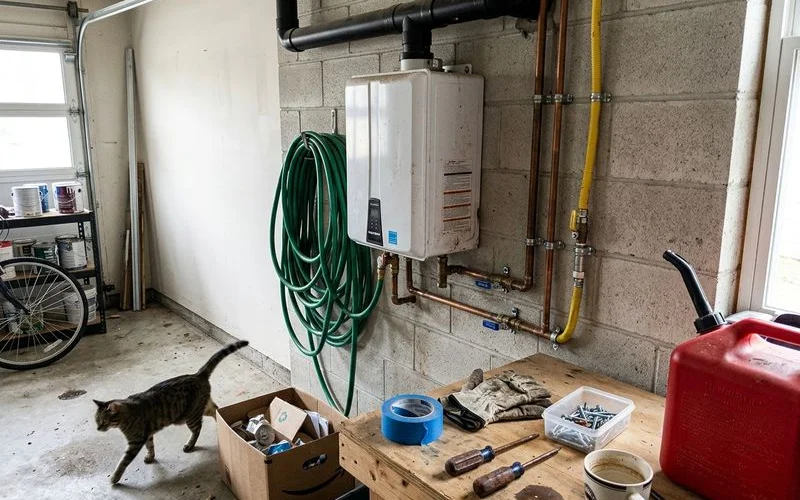
Side by side
Industry data shows that traditional tanks offer a cheaper, faster fix during an emergency, while tankless units require a higher initial investment for double the lifespan. Comparing these systems side by side reveals a clear choice based on your immediate budget and long term goals. National data from 2026 shows clear differences in upfront expenses and long term value.
| Feature | Traditional Tank | Tankless Unit |
|---|---|---|
| 2026 US Average Upfront Cost | $1,200 to $2,500 | $2,800 to $6,500 (with gas line work) |
| Install Complexity | Straightforward, fast swap | Often needs a 3/4-inch gas line upgrade and new venting |
| Energy Efficiency | Suffers 25% to 45% standby heat loss | Highly efficient, heats only on demand |
| Hot Water Supply | Limited by tank size (usually 40 to 50 gallons) | Continuous supply at the rated flow |
| Space Required | Takes up significant floor space | Wall mounted, freeing up garage corners |
| Hard-Water Maintenance | Annual flush, anode rod replacement every 3 years | Annual descaling is an absolute minimum |
| Primary Failure Mode | Tank rusts and leaks, usually at a seam | Heat exchanger scales up and triggers error codes |
| Typical Service Life | 8 to 12 years (shorter with untreated local water) | 15 to 20 years with strict maintenance |
When a tank is the right call
We often install standard storage heaters for local homeowners who want a predictable, affordable fix right now. A traditional tank is the right call when you need immediate hot water restored on a tight budget without completely rebuilding your garage plumbing. The decision usually comes down to three main practical reasons.
Simpler Ownership and Maintenance
Repair crews routinely pull out neglected standard units that still managed to provide hot water for a decade. Flush the system once a year, check the sacrificial anode rod every three years, and you are generally done.
The maintenance schedule is very forgiving of being a little late. We see that a 40-gallon or 50-gallon tank neglected for years will still mostly work until the very end. This reliability provides immense peace of mind for busy families.
Straightforward Emergency Installation
Replacing a broken tank with a new tank usually means no gas pipe changes and no new ventilation shafts. A standard installation for these straightforward swaps takes just a few hours.
This simplicity keeps the project cost down considerably compared to a massive conversion. A standard replacement is the smartest route if you have a flooded floor and just need the hot water running again by tonight.
Modest Hot Water Demands
We recommend looking at your actual daily usage before making a massive investment. Standby heat loss on a well-insulated modern tank is relatively small compared to older models from a decade ago.
Department of Energy data shows older units wasted up to 45 percent of their heat through standby loss, but modern foam insulation traps that energy much better.
The team knows that if nobody in the house is running back-to-back showers or multiple large appliances at once, the energy savings from going tankless might never justify the steeper upfront price difference. The math simply does not support a massive upgrade for a two-person household with low water usage.
When tankless is the right call
We advise upgrading to an on-demand system if you plan to stay in the home for more than ten years and already use a water softener. A tankless vs tank water heater makes sense when your household demands continuous hot water and you are prepared to perform strict annual descaling.
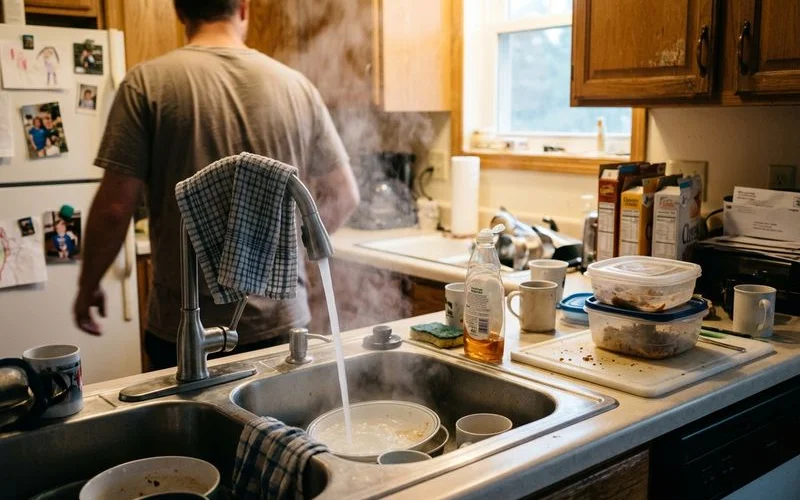
High or Unpredictable Hot Water Demand
Large households running back-to-back showers, multiple dishwashers, and frequent house guests will drain a standard 50-gallon unit quickly. Our installers hear endless praise from customers who no longer have to wait thirty minutes between morning showers.
Continuous hot water provides a genuine quality of life improvement for busy families. An electric or gas on-demand unit simply heats the water as it passes through, providing an endless supply at the rated flow.
Partnering with a Water Softener
We strongly suggest pairing these systems with a dedicated softener to protect the delicate internal heat exchanger. Softened water flowing upstream is the exact component that makes an on-demand unit make financial sense in our region.
A quality softener dramatically slows the aggressive scale buildup caused by 20-grain water. Most plumbers in this market warn that without a softening system, the hard minerals will bake onto the elements and severely shorten the unit’s 20-year lifespan.
Recovering Valuable Floor Space
A wall mounted unit gives back a real corner of your garage or utility closet. Removing a bulky cylindrical tank instantly frees up five to six square feet of usable storage space.
We love seeing clients use this newly available area for shelving, tools, or deep freezers. That extra square footage is incredibly valuable in modern homes.
Long-Term Homeownership Horizons
The economics of on-demand units depend heavily on a long ownership horizon. Our estimators remind customers that you are spending significantly more upfront on the equipment and the installation labor.
It takes several years of lower monthly gas or electric bills to recoup that initial investment. We tell property owners that if they plan to sell the house next year, a standard replacement is almost always the smarter financial play. Buyers rarely pay a premium just because a house has an upgraded heating system.
The condition, stated plainly
A tankless system in the Imperial Valley works beautifully with a strict descaling schedule and a dedicated water softener. Without those two protective measures, the system underperforms and fails years before its time. That is not a criticism of the technology itself, but rather simple arithmetic concerning our 20-grain local water. See tankless descaling frequency for the actual recommended maintenance intervals.
Sizing, briefly
The plumber calculate your exact household demand to recommend the perfect fit. Proper equipment sizing ensures you never run out of hot water while avoiding the mistake of paying to heat unused capacity.
Storage Tank Capacity and Recovery
Standard sizing focuses entirely on your peak household demand and the recovery rate of the burner. We look at scenarios like two simultaneous showers running at 2.5 gallons per minute plus a running dishwasher on a busy morning to decide your necessary capacity.
Undersizing the unit guarantees an unwelcome cold shower for the last person in the bathroom. The team always warns against oversizing as well, because you will pay daily energy costs to maintain 80 unused gallons at 120 degrees. Finding the precise middle ground prevents wasted utility spending.
On-Demand Gallons Per Minute (GPM)
On-demand sizing relies entirely on the flow rate in gallons per minute at your specific required temperature rise. Incoming groundwater temperatures matter immensely for this specific calculation.
We are fortunate that our region enjoys relatively warm groundwater that frequently sits around 70 degrees Fahrenheit during the summer. This warm starting point is a massive, rarely mentioned advantage for local residents.
A smaller required temperature rise means the exact same burner delivers significantly more usable flow here than it would in a freezing northern climate. Our installations show that the machine is not forced to fight 40-degree winter water to reach a comfortable shower temperature. This geographical perk means a smaller, more affordable unit can easily handle your daily needs.
How we recommend
We prioritize finding the most practical, reliable solution for your specific plumbing emergency. Deciding between a tank vs tankless water heater requires an honest conversation about your budget, your property, and your willingness to handle maintenance.
Our experts start by asking exactly how many people live in the house and whether your heavy hot water usage overlaps in the mornings. A thorough evaluation of your gas line capacity and current ventilation helps determine the actual installation cost. An honest assessment of your maintenance habits is equally critical before making a choice.
We know that selling a family an advanced on-demand unit that they will never descale only leads to broken equipment later. If your specific answers point to a straight standard replacement, the plumber will explicitly tell you so.
We would rather perform the smaller, simpler job than set you up for future frustration. Selling equipment that does not match your lifestyle benefits no one. Call our El Centro plumbers today to get an expert assessment and restore your hot water immediately.