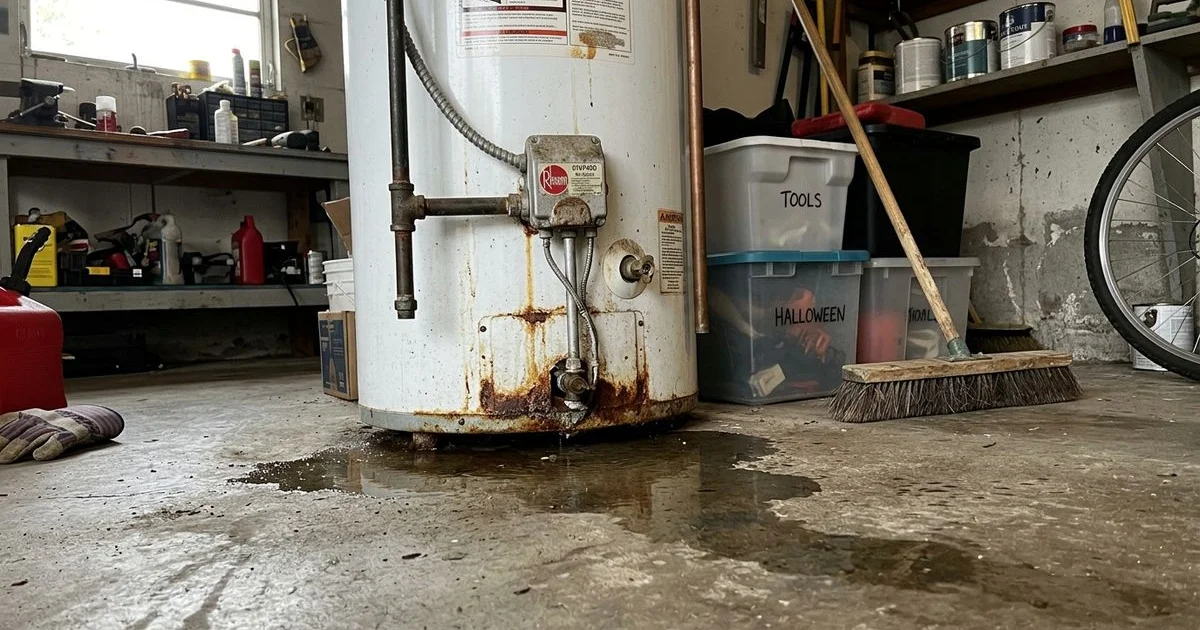
Most folks assume a water heater goes bad overnight.
We see the messy aftermath of burst tanks across the Imperial Valley every week. The reality is that your system usually gives off clear warning signs months before a catastrophic failure. Data from the U.S. Department of Energy shows water heating makes up about 18% of a typical home’s energy use.
When minerals build up, your unit loses efficiency and eventually cracks. The team will walk you through the top signs water heater is failing, how age impacts the tank, and exactly what to do when you spot a leak.
Four signs worth acting on
Water heaters rarely fail without warning. They usually show distinct signs of internal damage months before they actually burst.
-
You run out of hot water sooner than you used to. The same two showers that felt great last year now leave the second person freezing. Sediment accumulation takes up the physical space that used to hold water inside the tank. That chalky limescale also acts as an insulator, dropping the unit’s heating efficiency by up to 29%. Occasionally, a broken dip tube causes this symptom instead, which is a cheap repair worth ruling out.
-
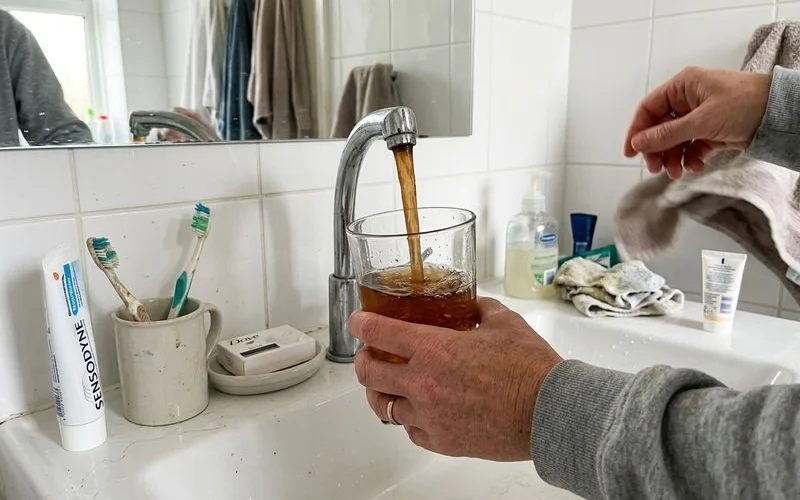
Rust in the hot water only. Run the cold tap at your sink first. If the cold water is clear but the hot side runs tinted, the rust is coming from inside the tank. This indicates internal corrosion. It usually means the sacrificial anode rod has been completely consumed by the hard water, and the steel tank itself is now rusting away.
-
Popping or rumbling during a heat cycle. Loud noises mean water is trapped under a thick layer of calcium carbonate scale and is literally boiling through it. We hear this complaint constantly in local homes. In our local 20-grain hard water, this heavy buildup shows up much earlier in a heater’s life than most people expect.
-
Any moisture at the base. This specific issue deserves your immediate attention. Puddles could stem from a loose fitting, heavy condensation, or the T&P (temperature and pressure relief) valve discharging. All of those are fixable issues. However, if the tank shell itself is leaking, the unit is not repairable and requires immediate replacement. Insurance industry data from 2026 shows that emergency flood remediation from a burst tank averages between $3,000 and $12,000.
Age changes the math
Check the manufacturer data plate located on the side of your unit. Most brands encode the exact build date right into the serial number. We can decode that format for you over the phone if the numbers are not obvious.
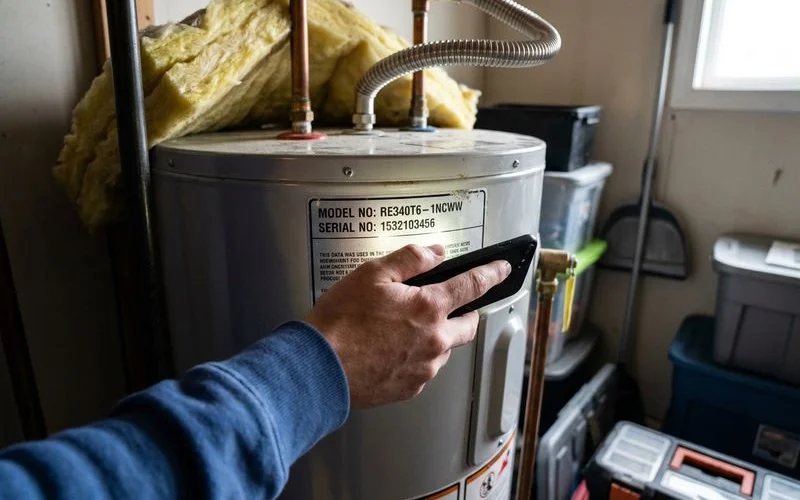
A standard residential tank water heater has a design lifespan of 8 to 12 years. That rated service life assumes average city water and routine yearly maintenance. Here in the Imperial Valley, 20-grain water and skipped flushes usually cut that real-world lifespan down to just 6 to 8 years.
The plumber consider any unit past its rated age with the symptoms above to be on borrowed time. Patching an ancient system today will not stop the bottom from rusting out tomorrow.
The economics of waiting
A planned replacement happens on a weekday, with the exact unit you chose, at a normal flat rate. An emergency replacement happens after the tank has emptied onto the garage floor, at whatever hour that occurs, with whatever unit is currently available on the truck. The financial difference includes a massive cleanup bill, not just the plumbing costs.
Signs that are usually a repair, not a replacement
Not every strange symptom means you need a completely new heater. We would much rather fix a broken part than sell you a tank you do not need. Here is a quick breakdown of issues that usually just require a part swap.
| Symptom | Likely Cause (Gas) | Likely Cause (Electric) |
|---|---|---|
| No hot water at all, no leak | Pilot light, thermocouple, or gas control valve problem. | Tripped high-limit switch, failed heating element, or broken thermostat. |
| Water is wildly inconsistent | Faulty thermostat or sediment buildup. | Faulty thermostat or burnt-out lower element. |
| Pilot will not stay lit | Dirty thermocouple or failing thermopile. | N/A |
A small leak from the T&P discharge pipe often points to the valve itself failing. Sometimes it indicates excess thermal expansion pressure in the closed plumbing system that requires an expansion tank. Both are highly fixable, and both are worth addressing immediately because a T&P valve exists strictly for your family’s safety.
The physical diagnosis of these parts is a standard part of any water heater repair visit. The plumber provide a full, transparent breakdown of the costs to help you weigh the repair vs replacement decision. This ensures you only pay for what actually needs fixing.
What to do right now
If you notice any moisture pooling at the base of the tank, act fast. Shut off the cold water inlet valve located on the pipe above the heater. Next, turn off the gas supply or flip the electrical breaker to the unit, then call a professional. That quick response prevents the tank from refilling and emptying onto your floor repeatedly.
If the symptoms are the slower kind, like less hot water or a popping noise, schedule a flush and have the anode rod checked. Replacing a depleted anode rod on a unit that still has some life left frequently buys you real time. We always recommend treating the water if you are paying for a replacement anyway. Putting a brand-new tank on untreated 20-grain water simply starts that destructive 6-year clock over from zero.
Recognizing the signs water heater is failing early gives you the power to choose when and how to replace it.
A proactive approach saves you from cold showers, expensive emergency fees, and extensive water damage.
If your unit is showing any of these red flags, shut off the water and contact an El Centro plumber today to evaluate your system.