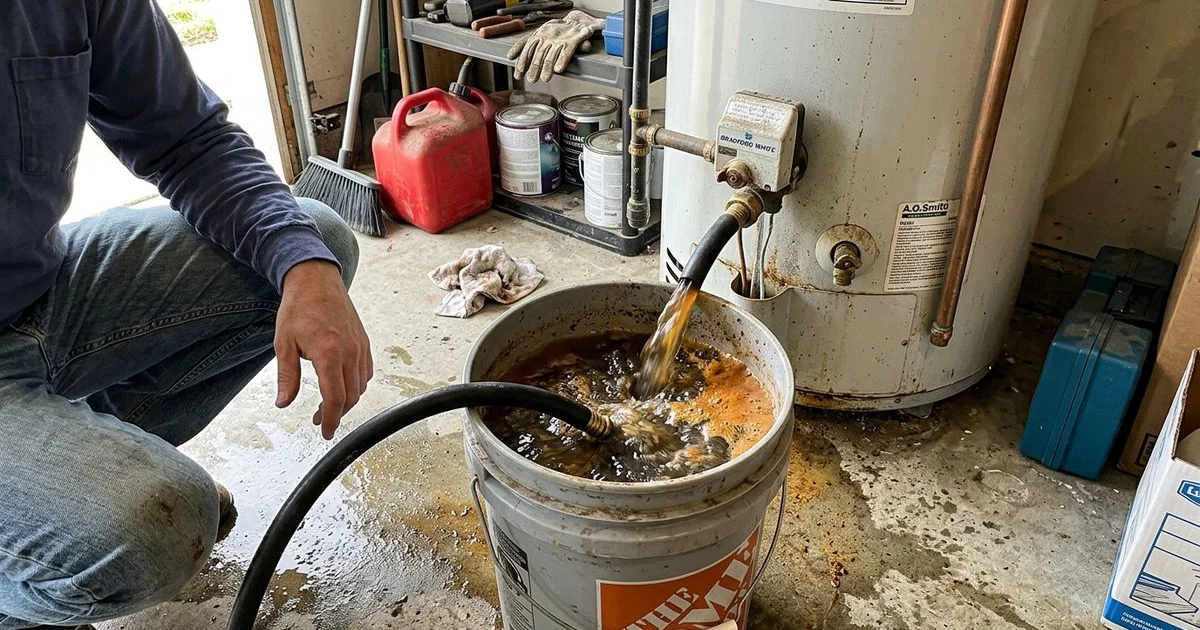
When your garage floods at 2 AM, the immediate priority is stopping the damage. But once the water is off, you might wonder why do water heaters fail early in our area. The simple truth is that Imperial Valley water chemistry actively destroys standard plumbing hardware.
We see the consequences of this harsh water every single day in the field. Local equipment rarely reaches its factory-rated lifespan, which is exactly why our water heater repair and replacement service stays so busy.
The city’s water quality report puts our local municipal water hardness at roughly 340 to 350 parts per million, about 20 grains per gallon.
That massive concentration of minerals is the exact reason a standard tank breaks down so quickly. Let’s look at the actual mechanism behind this destruction. The team will detail the early warning signs of failure and provide exact maintenance steps that work.
The mechanism: why do water heaters fail early
Imperial Valley water runs at roughly 340 to 350 mg/L total hardness, which equals about 20 grains per gallon. Every single gallon that enters your tank carries dissolved calcium and magnesium.
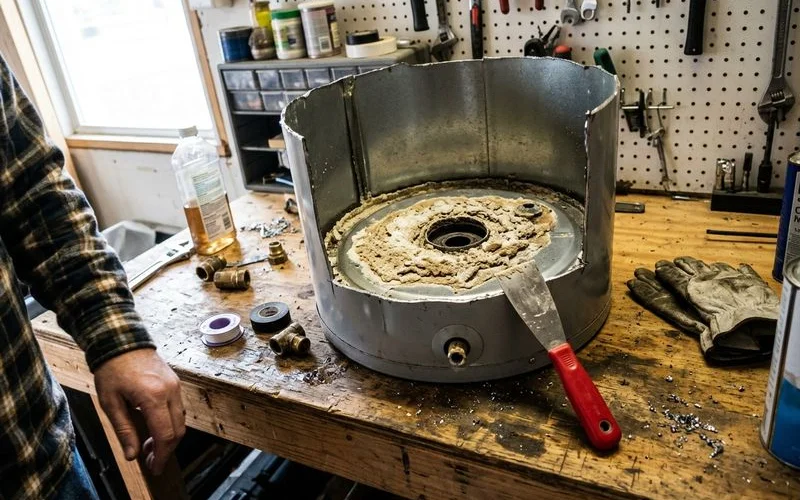
Heating that water immediately changes its ability to hold those minerals in solution. They precipitate out and settle to the bottom. Gravity puts them directly over the burner in a gas unit, or right around the lower heating element in an electric model.
How Mineral Scale Forms
Over the course of a few months, this loose sediment bakes into a hard, solid crust. Steel transfers heat efficiently, but a thick mineral scale layer does not. The burner is effectively heating a solid rock.
The plumber frequently find units where the water above that rock heats incredibly slowly. This constant thermal strain is the primary factor regarding water heater lifespan hard water impacts. Without treatment, a standard tank in El Centro might only last six to eight years.
The Chain Reaction of Failure
From that initial scale buildup, the mechanical consequences stack up in a very predictable order. We look for these specific cascading failures on every service call.
- Recovery slows down. The tank takes much longer to reheat, so you run out of hot water sooner than you used to.
- Burn cycles lengthen. Your system uses more gas or electricity to generate the exact same amount of hot water.
- The steel overheats. Heat cannot pass into the water fast enough and stays trapped in the tank bottom, which was never designed to run at that extreme temperature.
- Corrosion accelerates. Hot steel corrodes significantly faster, and it decays from the inside where you cannot see it.
- The tank fails. This usually manifests as a sudden leak at the bottom seam, often with very little warning.
That process explains why units here fail years short of their rated life. It is not normal wear. Overheating through a blanket of scale destroys the metal integrity.
Heat makes it worse
Summer in this valley regularly pushes ambient temperatures above 110 degrees for extended stretches. Incoming supply water stays physically warm for months at a time.
That seasonal heat matters much more than it sounds. Warmer supply water carries dissolved minerals much closer to their precipitation point before the water ever enters the tank.
The Impact of Garage Temperatures
Your heater cycles frequently against high daily demand in a garage that may itself exceed 110 degrees. Nothing in the system ever gets a rest period. Equipment that would easily coast through a mild climate gets pushed to the limit year-round here.
Plumbers in this market see this exact thermal stress causing major issues for newer heat pump water heaters in El Centro. A unit’s efficiency drops sharply when garage temperatures spike. Gas tankless models perform better in this specific heat, but they still fight the exact same hard water scale layer.
The sounds and signs, decoded
Recognizing the early warnings can save you from a flooded garage at midnight. The phone team is trained to listen for these specific symptoms when an Imperial Valley homeowner calls in.
Popping or rumbling during a heat cycle. Water trapped underneath the sediment layer boils and physically forces its way out through the crust. This noise is the earliest reliable indicator that the scale has real depth. Caught at this early stage, a professional flush usually helps. We break the noise down further in our guide on water heater popping and rumbling sounds.
Running out of hot water sooner. Sediment occupies physical volume inside the tank that used to hold water. Your recovery time has also slowed down. Sometimes a broken dip tube causes this symptom, which is always worth checking before replacing the whole unit.
Late-Stage Warning Signals
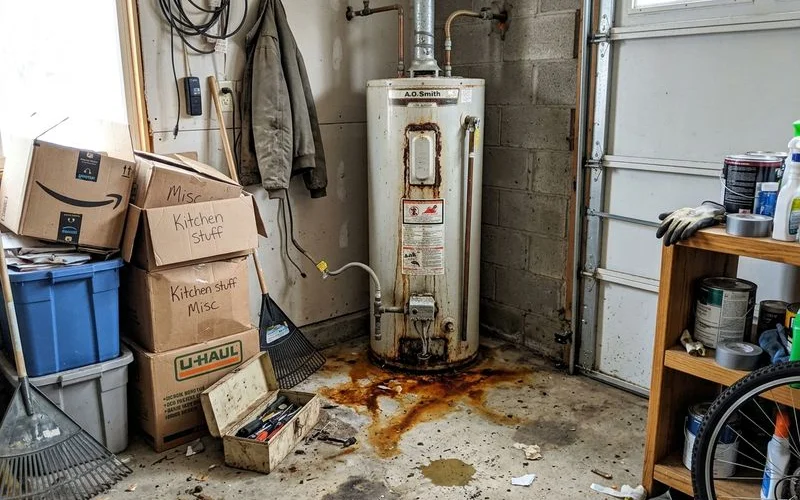
Rust in the hot water only. This indicates active internal tank corrosion, generally occurring after the sacrificial anode rod has been fully consumed. It is a late-stage signal that a leak is imminent.
A gas bill climbing without a usage change. Longer burn cycles for the same amount of hot water will quietly drive up your monthly utility costs.
Any moisture at the base. A puddle could be a loose fitting, or it could be a failing Temperature and Pressure relief valve. The first two issues are simple repairs, but a leaking tank bottom requires a full replacement.
What “rated life” assumes
Manufacturer service life figures assume average water and routine maintenance. Neither applies here by default. At 20 grains per gallon with no flushing, the clock runs considerably faster.
The Cost of Ignoring Symptoms
Ignoring a popping tank is the most expensive mistake a homeowner can make. Our data shows that an annual maintenance flush in El Centro costs between $100 and $200. Contrast that preventive cost against an emergency weekend replacement.
The Water Quality Research Foundation recently found that tankless units running on untreated hard water can completely fail in just 1.6 years. Paying attention to these early warning signs is your best financial defense.
What actually extends the life
You cannot change the municipal water chemistry, but you can control how your plumbing interacts with it. We recommend a few specific strategies to protect your investment.
Proven Maintenance Strategies
Annual flushing. Draining sediment before it bakes into a fixed layer is the single highest-value maintenance item. On a tank that has never been flushed, the first drain attempt tells us a lot about its internal condition.
Anode rod service. The sacrificial anode is a metal rod that intentionally corrodes in place of the steel tank. Once the rod is completely gone, the tank steel starts corroding immediately. Checking the anode every few years and replacing it costs a fraction of a new heater.
Water treatment upstream. A properly sized water softener removes hardness before it ever reaches the tank. This addresses the root cause rather than just treating the symptom. In a valley where mineral scale kills plumbing, this is why we treat water softeners and reverse osmosis as required preventive maintenance rather than a luxury upgrade.
Making Smart Replacement Choices
Correct sizing on replacement. An undersized tank cycles harder and scales up much faster. Sizing the unit to your actual household demand matters significantly more here than in soft-water regions.
Descaling for tankless units. Tankless heat exchangers feature the narrowest internal passages in your house and scale the fastest. The manual’s maintenance interval is written for average municipal water, not our harsh local supply.
Our customers often ask about upgrading to high-efficiency models when a standard tank fails. Imperial Irrigation District frequently runs an All Weather Energy Savings Program that offers rebates up to $1,500 for installing heat pump water heaters.
The honest summary is clear. In Imperial Valley, you either maintain your equipment on a strict schedule, treat the incoming water, or replace the unit prematurely.
| Maintenance Strategy | Frequency | Expected Benefit | Estimated Local Cost |
|---|---|---|---|
| Professional Tank Flush | Every 12 Months | Prevents hard scale buildup | $100 - $200 |
| Anode Rod Inspection | Every 2 to 3 Years | Stops internal steel corrosion | $150 - $300 |
| Tankless Descaling | Every 6 to 12 Months | Keeps narrow passages clear | $150 - $250 |
| Whole Home Water Softener | Daily (Automated) | Adds 3 to 5 years to lifespan | Varies by system size |
Replacing the tank is always the most expensive choice out of those three options.
If you are dealing with a leaking tank or no hot water right now, do not wait for the damage to spread. The dispatcher are ready to answer your call and get a technician to your door immediately.
You no longer have to guess why do water heaters fail early in your home. Call our El Centro plumbing team today, and let a professional restore your hot water safely.