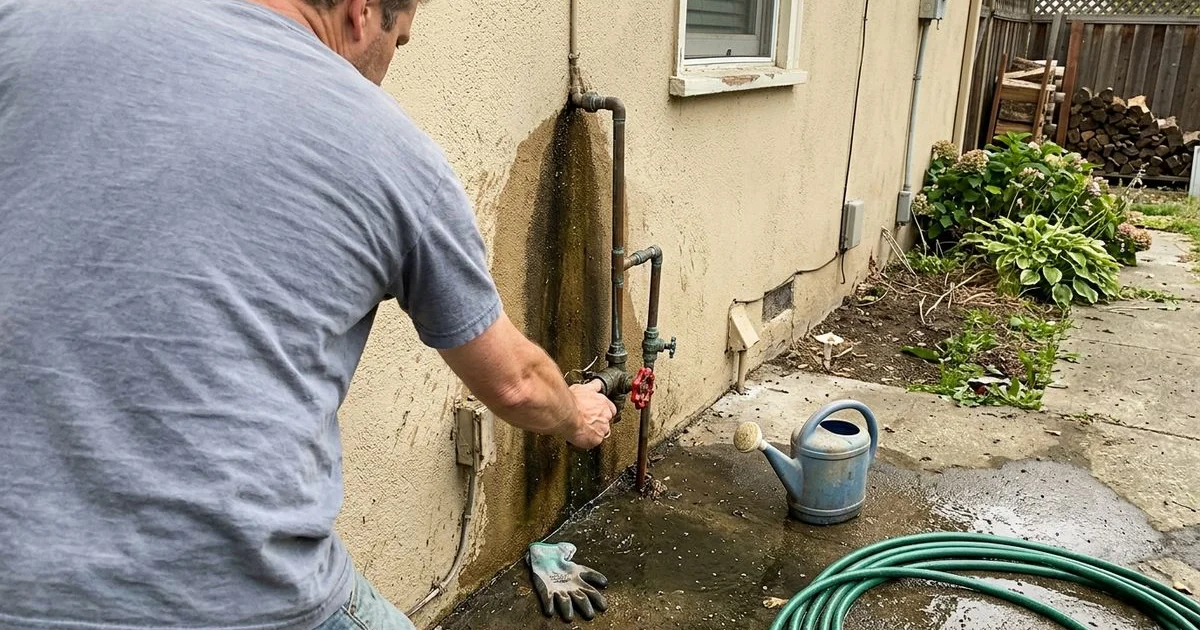
You know how fast water moves when a valve suddenly fails under pressure.
Figuring out what to do when a pipe bursts is strictly a race against that incoming volume. Industry restoration data shows a standard half-inch residential supply line can pump out 50 gallons of water per minute.
That flow rate is the exact reason why a quick response is the only thing standing between a minor cleanup and a total structural tear-out.
Let’s look at the critical safety steps, the immediate actions required to stop the flooding, and how to communicate effectively with an emergency plumber.
Stop the water first
Find your main shutoff valve and close it immediately. A burst pipe is a volume problem, so everything in the first five minutes is about stopping the flow.
The team has seen entire floors ruined because homeowners hesitated. This hesitation turns a simple leak into a massive structural issue.
In most US homes, the main shutoff sits right where the supply enters the house. Look for it on the street-facing side near a hose bib or inside the garage.
If you cannot find it, go to the meter box at the curb. There is a valve on the house side of the meter that controls the entire property.
How to stop a burst pipe at the meter
Different homes have different hardware depending on when they were built. You need to know which one you are handling before applying force.
| Valve Type | How to Operate | Important Warning |
|---|---|---|
| Ball Valve (Modern) | Turn the lever a quarter turn perpendicular to the pipe. | Usually very reliable and easy to move. |
| Gate Valve (Older) | Turn the round handle clockwise multiple times. | Do not force it. Seized valves snap easily and flood the yard. |
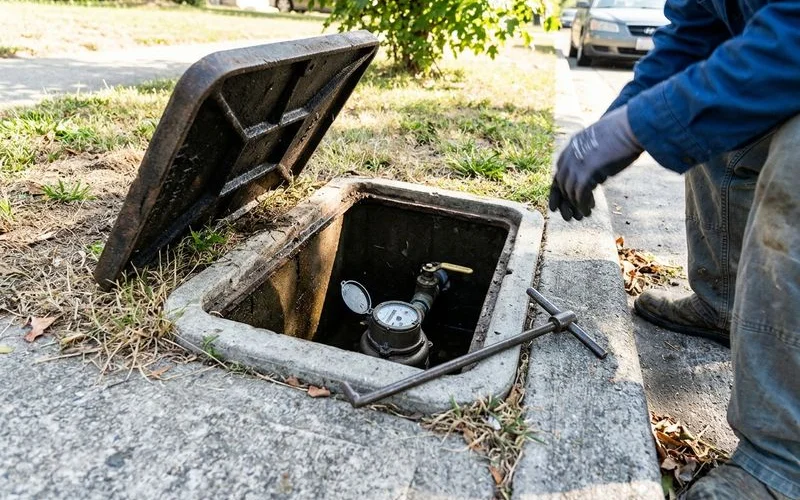
If a pipe is bursting right now and you cannot find the valve, call emergency plumbing at 760-509-2525. Your call is answered. We will find it with you while you look on the phone.
It is worth doing this before you ever need it. Find your main shutoff on a calm afternoon. Our guide on how to shut off your water walks through locating and operating each valve type.
Kill power near the water
Cut power to the affected circuits at your breaker panel before you go anywhere near the wet area. Water and electricity in the same room present a severe electrocution risk.
The Occupational Safety and Health Administration (OSHA) warns that wet skin drops the body’s electrical resistance by thousands of ohms. This extreme drop means a minor shock in a dry room can become a fatal incident in standing water. If water is spreading toward outlets, appliances, a furnace, or a water heater, stop immediately and shut off those breakers.
If the panel is in the wet area, stay out completely. Call the local utility company or an electrician to drop the power from the outside.
Do not wade in
Standing water in a room with live circuits is not worth the towels you would save. Shut the main from a dry location if you can reach it, cut power from a dry location, and wait.
Watch out for these specific hazards during a burst pipe emergency:
- Submerged extension cords or power strips on the floor.
- Water pooling under refrigerators or washing machines.
- Drips landing directly on exposed outlets or baseboard heaters.
- Using wet hands to open the main electrical panel.
Drain the lines
Open the lowest cold faucet in the house to release the remaining water and relieve pressure. Once the main is closed, the pipes still hold pressurized water that will keep draining into your home.
Residential pipes in the Imperial Valley typically maintain 50 to 60 PSI of water pressure. Opening a fixture at the lowest point allows gravity to pull that pressurized water outside or into a sink instead of through the broken pipe.
An outside hose bib, a laundry sink, or a ground-floor tub works perfectly for this step. After relieving the bottom pressure, open a couple of upper-level faucets. This action lets air into the system so it drains quickly rather than holding a vacuum.
Managing the water heater
Leave the water heater alone unless it is the actual source of the flood. Tampering with an intact heater during a crisis just adds unnecessary complications.
| Water Heater Status | Action Required |
|---|---|
| Not the leak source | Leave it alone completely. |
| Is the leak source | Close the cold inlet valve on top. |
| Gas heater leaking | Shut off the gas supply line or switch to pilot. |
| Electric heater leaking | Flip the dedicated electrical breaker off. |
Contain what you can
Place buckets under active drips and lay towels along the leading edge of the water spread. Move absorbent or valuable items up and away from the floor immediately to minimize damage.
Cardboard boxes on a garage floor need to go on a shelf. Rugs must come up right away. Electronics must be moved to higher ground.
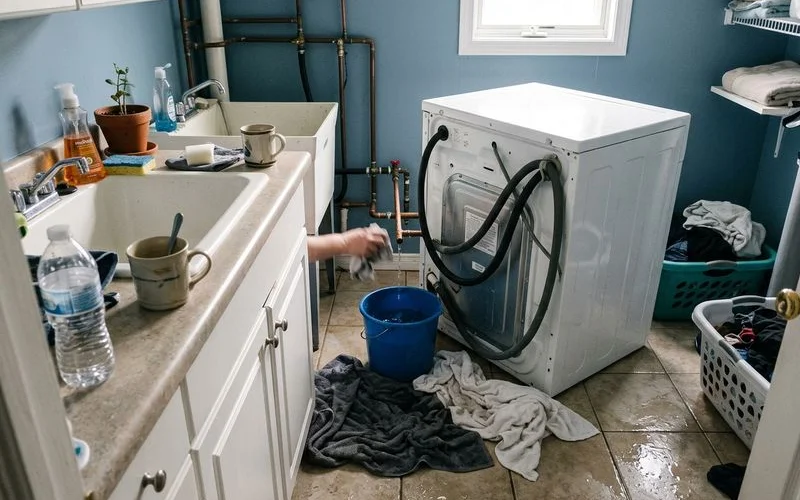
Take photos before you clean up any of the mess. The average water damage insurance payout in the US reached $13,954 in 2026. Insurance adjusters will base their financial decisions heavily on your initial evidence.
Make sure your photos capture these critical details for the adjuster:
- Wide shots showing the exact depth of the standing water.
- Close-up pictures of the ruptured pipe or failed fixture.
- Clear images of product serial numbers on damaged electronics.
- The exact position of rugs or furniture before moving them.
Airflow and drywall preservation
Get the wet area moving air quickly. Fans and open windows help accelerate drying immensely.
Data from 2026 insurance restorations confirms that hazardous mold begins forming in just 24 to 48 hours. In a dry climate, fast evaporation is a massive advantage.
If water reached drywall, do not patch anything yet. The framing behind the wall has to dry completely first. A plumber will need access to the failed section to make the proper repair anyway.
What to tell us when you call
Have the location of the water, the duration of the leak, and the status of your shutoff valve ready for the dispatcher. This precise information determines how we prioritize and equip the responding truck.
We ask four critical questions when you dial the emergency line. These details help the plumber arrive with the correct tools and replacement parts.
- Where is the water? Tell the operator the specific room and whether it is coming from a wall, a ceiling, a floor, or a fixture.
- How long has it been going? Ten minutes of dripping and an overnight flood are entirely different jobs.
- Is the water off? Let the team know if the main is closed, partially closed, or completely missing.
- One fixture or the whole house? This distinction separates a simple branch line repair from a main line crisis.
Anything else you can add helps immensely. Tell the operator the pipe material if you know it, or mention whether the home is built on a concrete slab.
If the house has a history of pinhole leaks, say so immediately. That context changes the conversation from a basic patch job to a serious discussion about whether the whole run needs replacing.
Our dispatch line is answered at any hour in English or Spanish. Stay on the phone if shutting the water off will stop the damage and you cannot find the valve. We will track it down with you.
Take action immediately
Knowing what to do when a pipe bursts is only half the battle. Executing these steps quickly is what actually saves your property. Grab your phone, locate that main shutoff, and call our El Centro plumbers to get your home back to normal.